1. Industry Context: The High Cost of the "Accountability Gap"
In the Philippines, business losses from theft and mismanagement are shifting from physical shoplifting to sophisticated internal fraud and asset "disappearance." According to the PwC 2024 Global Economic Crime and Fraud Survey, nearly 50% of organizations globally have experienced some form of procurement or asset-related fraud in the last 24 months.
In the local context, the National Privacy Commission (NPC) Security Incident Reports highlight that "Loss of Equipment" remains a top-tier security risk for Philippine enterprises. For Filipino MSMEs, these losses are compounded by skyrocketing operational costs; BusinessWorld reports that Manila’s logistics rental rates rose to ₱389 per square meter in late 2024. When high-cost assets are idle or stolen, businesses are essentially paying a premium to store "ghosts" in some of the most expensive warehouse spaces in Southeast Asia.
2. The Challenge: Why Manual Tracking is a Financial Liability
A prominent mid-sized Engineering Firm operating across Greater Metro Manila and Cavite struggled with a recurring 12% annual asset attrition rate. Their reliance on manual logbooks and decentralized spreadsheets led to critical operational failures:
- "Ghost Assets": The firm was paying insurance premiums and taxes on specialized surveying equipment that had been missing for months.
- Unvouched Transfers: Tools moved between job sites in BGC and Dasmariñas without digital sign-offs, creating "blind spots" where theft was easily disguised as "logistical confusion."
- Audit Deadlocks: Under the Ease of Paying Taxes (EOPT) Act / RA 11976, the BIR now mandates stricter digital record-keeping. The firm faced potential tax penalties because they could not physically reconcile their Asset Registry during a routine assessment.
3. The Solution: Solomon FAMS (Fixed Asset Management System)
Penxel Technologies deployed the Solomon FAMS suite to replace the firm’s paper-based chaos with a "Command and Control" digital environment.
Key Technical Implementation:
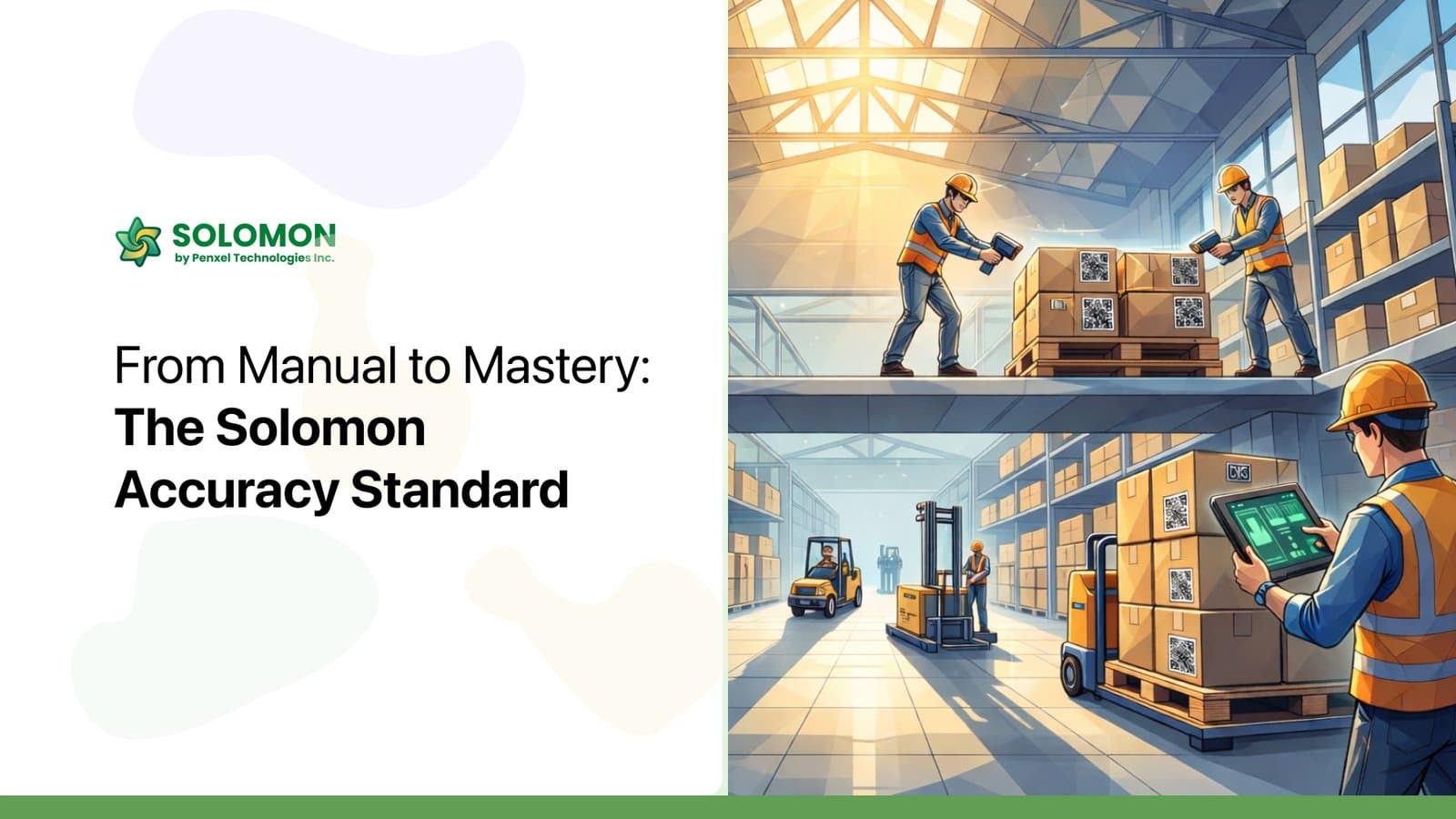
- Tamper-Proof Tagging: Every piece of equipment was fitted with ruggedized QR or RFID tags, enabling instant mobile identification and eliminating manual data entry errors.
- Digital Chain of Custody: The system ensures an asset cannot be moved or checked out without a digital "handshake" (signature or biometric) from the assigned custodian, creating an ironclad audit trail.
- Real-Time "Spot Audits": Instead of a month-long manual count, site managers used high-speed scanners to verify hundreds of assets in minutes, syncing directly to the central cloud for immediate management visibility.
4. The Results: ROI Beyond Security
Within the first year of implementing Solomon FAMS, the firm achieved:
- Zero Unaccounted Losses: By removing anonymity and enforcing strict digital accountability, "mysterious" disappearances stopped immediately. Every tool was tied to a live user ID.
- Elimination of Procurement Redundancy: By having a real-time map of all available assets, the firm eliminated the "panic buying" of equipment that was already in stock but "lost" in the manual system.
- Streamlined Regulatory Readiness: The firm moved from chaotic spreadsheets to a structured digital registry, significantly reducing the labor hours required to prepare for external financial audits and local government inspections.
"We stopped looking at asset tracking as an 'admin task' and started seeing it as 'profit protection.' Solomon FAMS gave us the visibility we needed to scale without losing our shirts to theft." — Operations Director