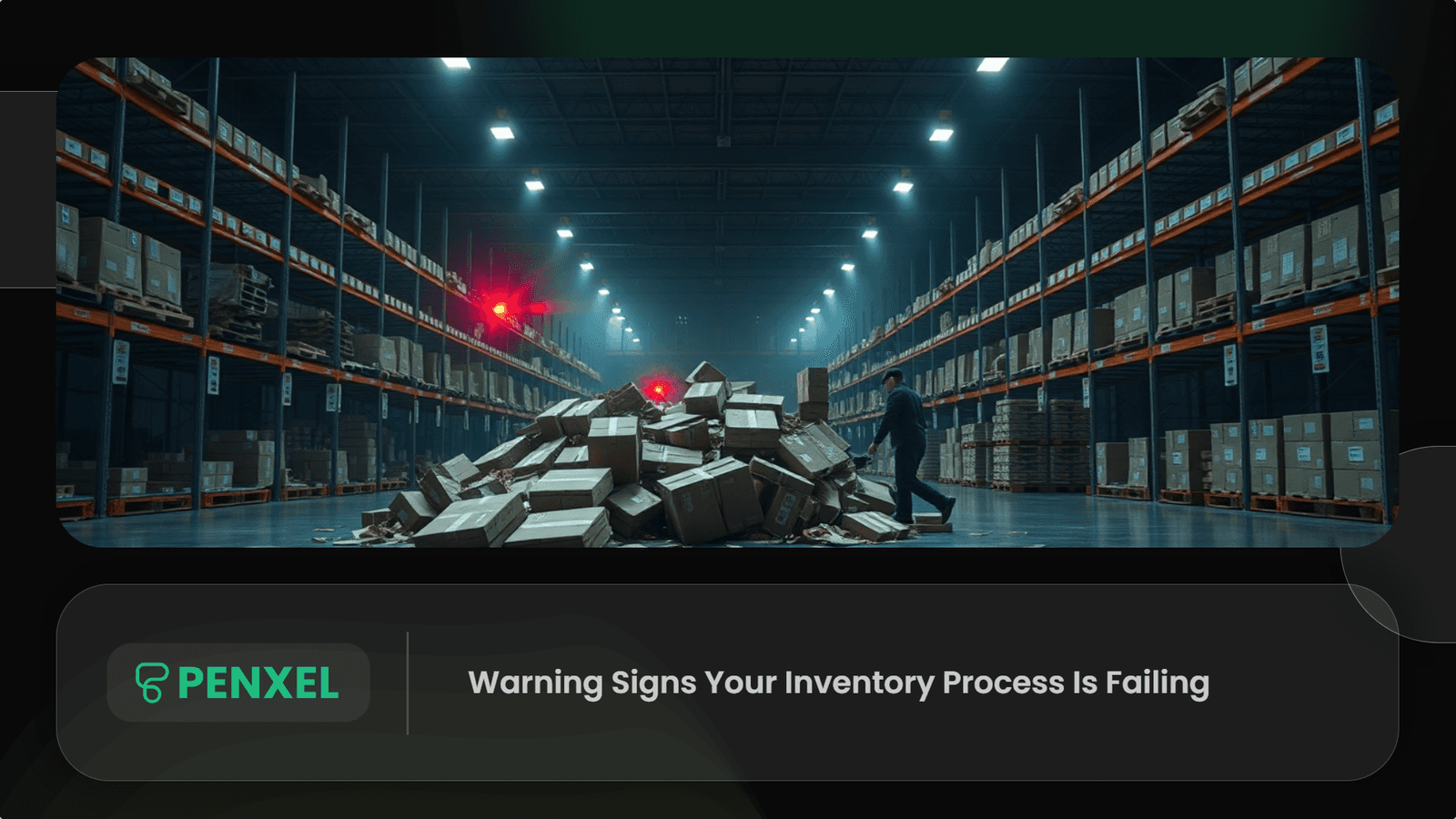
Effective inventory management is the backbone of any product-based business. It ensures you have the right products, in the right quantities, at the right time. When this critical process falters, the ripple effects can be catastrophic, leading to lost sales, dissatisfied customers, and significant financial strain. Recognizing the early warning signs of a failing inventory process is crucial for timely intervention and sustained business health.
Ignoring these signals can escalate minor issues into major operational roadblocks. Here are five clear indicators that your inventory process might be breaking down and requires immediate attention.
1. Frequent Stockouts or Overstocks#
One of the most immediate and impactful signs of inventory trouble is a consistent imbalance in your stock levels.
What It Looks Like#
Stockouts: Regularly running out of popular items, leading to backorders, lost sales, and customer frustration. Your sales team often hears, "Is this in stock?" only to find it isn't.
Overstocks: Accumulating excess inventory of slow-moving or obsolete products, tying up capital, increasing storage costs, and risking spoilage or obsolescence. Your warehouse is full of items nobody wants.
Impact#
This imbalance directly hits your bottom line. Stockouts mean missed revenue opportunities and a tarnished reputation. Overstocks drain cash flow, incur higher carrying costs (storage, insurance, spoilage), and may force steep discounts to clear space. For example, a clothing retailer constantly out of medium-sized bestsellers but overflowing with unpopular colors faces both lost sales and wasted capital.
2. Inaccurate Inventory Records#
If your physical inventory rarely matches what your system reports, you have a serious problem that undermines every other operational decision.
What It Looks Like#
Significant discrepancies between physical counts and system records (e.g., your software says you have 100 units, but a physical count reveals only 70).
Difficulty locating specific items in the warehouse, even when the system indicates they are present.
Frequent "phantom" inventory—items that appear in the system but cannot be found.
Impact#
Inaccurate records lead to poor forecasting, inefficient order fulfillment, and wasted labor. Staff spend valuable time searching for items that aren't there or are in the wrong location. This can also lead to incorrect purchase orders, either ordering too much of what you already have or not enough of what you truly need. Imagine a distributor promising a delivery based on system data, only to discover the items aren't available, leading to last-minute scrambling and customer apologies.
3. Rising Operational Costs (Beyond Expected Growth)#
While growth naturally brings increased costs, a disproportionate rise in expenses related to inventory handling is a red flag.
What It Looks Like#
Unexpected increases in storage fees, especially for third-party logistics (3PL) providers.
A surge in expedited shipping costs due to frequent rush orders to prevent stockouts.
Higher labor costs for inventory-related tasks, such as increased overtime for cycle counting or manual reconciliation efforts.
Growing rates of product damage, loss, or theft that aren't being properly tracked or addressed.
Impact#
These costs eat into profit margins, making your business less competitive. They often point to inefficiencies within the inventory process itself, such as poor warehouse layout, inadequate receiving procedures, or a lack of proper inventory tracking tools. For instance, a small e-commerce business frequently resorting to overnight shipping to fulfill orders because their standard replenishment process failed is spending unnecessarily.
4. Customer Complaints About Order Fulfillment#
Your customers are often the first to feel the effects of a deteriorating inventory process.
What It Looks Like#
An increase in complaints about delayed deliveries, incorrect items shipped, or incomplete orders.
Customers receiving notifications about backordered items long after placing their purchase.
A rise in returns due to shipping errors or damaged goods that weren't properly handled in the warehouse.
Impact#
Customer dissatisfaction is a direct threat to your brand reputation and long-term viability. Negative experiences lead to churn, poor reviews, and a loss of trust. Word-of-mouth can quickly spread, making it harder to attract new customers. A furniture store that consistently delivers the wrong color sofa or experiences long delays due to mismanaged stock will quickly see its customer base dwindle.
5. Lack of Real-Time Visibility and Reporting#
Operating without clear, up-to-date information about your inventory is like navigating a ship in dense fog.
What It Looks Like#
Reliance on outdated spreadsheets or manual counting for critical inventory decisions.
Inability to quickly generate accurate reports on stock levels, turnover rates, or order fulfillment status.
Decision-making based on intuition or historical data that doesn't reflect current realities.
Difficulty in tracking inventory movement across multiple locations or stages of the supply chain.
Impact#
Poor visibility cripples your ability to make informed decisions, react quickly to market changes, or identify trends. Without real-time data, forecasting becomes guesswork, and opportunities to optimize stock levels or streamline operations are missed. A manufacturing plant unable to get an immediate count of critical components stored in different warehouses will face production delays and inefficient scheduling.
Taking Action#
Recognizing these warning signs is the first step. The next is to conduct a thorough audit of your current inventory processes, invest in the right technology, and provide your team with the training they need. Proactive improvements can transform a failing inventory system into a streamlined operation that supports sustainable business growth.
With Penxel, this process becomes much easier. Penxel helps you gain real-time visibility into your inventory, automate stock tracking, monitor critical stock levels, reduce manual errors, and generate actionable insights for smarter purchasing decisions. Instead of reacting to stock issues after they happen, you can identify risks early, optimize inventory levels, and keep your operations running smoothly with confidence.