For years, “AI in warehousing” sounded like something only massive global companies could afford.
Robots moving boxes.
Fully automated fulfillment centers.
Self-driving forklifts.
Screens filled with predictive analytics.
But in reality, most AI adoption in warehousing today is far less dramatic — and far more practical.
For Philippine SMEs, AI in warehousing is increasingly about solving everyday operational problems:
- Reducing stockouts
- Preventing overstocking
- Improving inventory accuracy
- Predicting demand faster
- Cutting manual encoding work
- Handling labor shortages more efficiently
And that matters because warehouse operations across the Philippines are under growing pressure from retail expansion, rising customer expectations, and logistics disruptions.
According to Supply Chain Dive, businesses globally are now prioritizing resilience, visibility, and automation over simply lowering costs.
Why This Matters More in the Philippines
The Philippine logistics and retail sectors are evolving quickly.
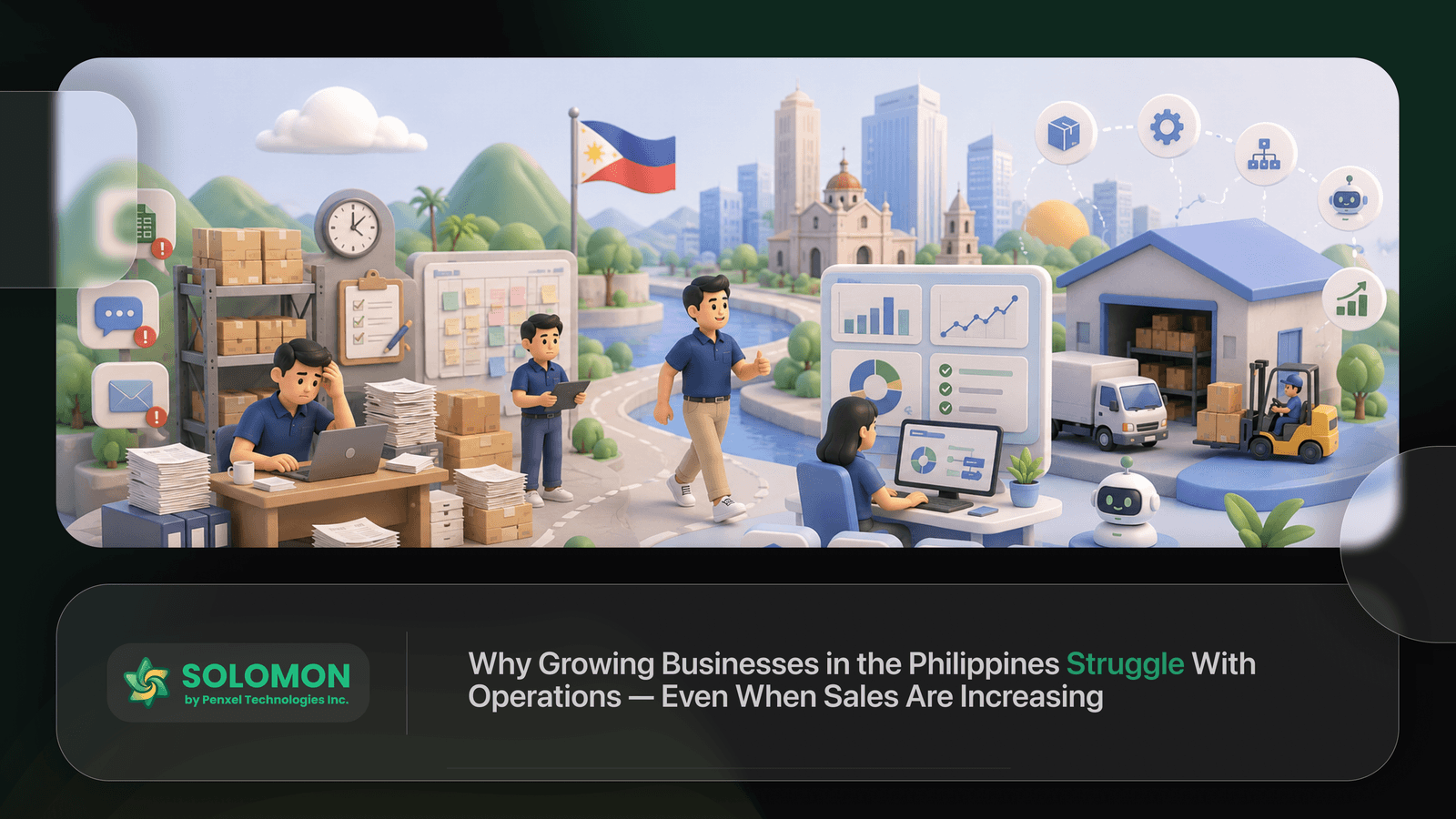
E-commerce growth, regional expansion, and increasing customer expectations for faster fulfillment are forcing businesses to improve operational efficiency without dramatically increasing headcount.
At the same time, labor shortages and operational complexity are becoming major supply chain concerns globally.
Reports from Supply Chain Dive show that companies are increasingly treating labor as a strategic operational constraint, accelerating investments in automation and AI-assisted workflows.
For Philippine businesses, this creates a difficult balancing act:
- Demand becomes harder to predict
- Warehouses become more complex
- Inventory errors become more expensive
- Hiring and training operations staff becomes harder
This is where AI-powered warehousing tools are starting to provide measurable value.
What “AI in Warehousing” Actually Looks Like
For SMEs, AI rarely starts with robots.
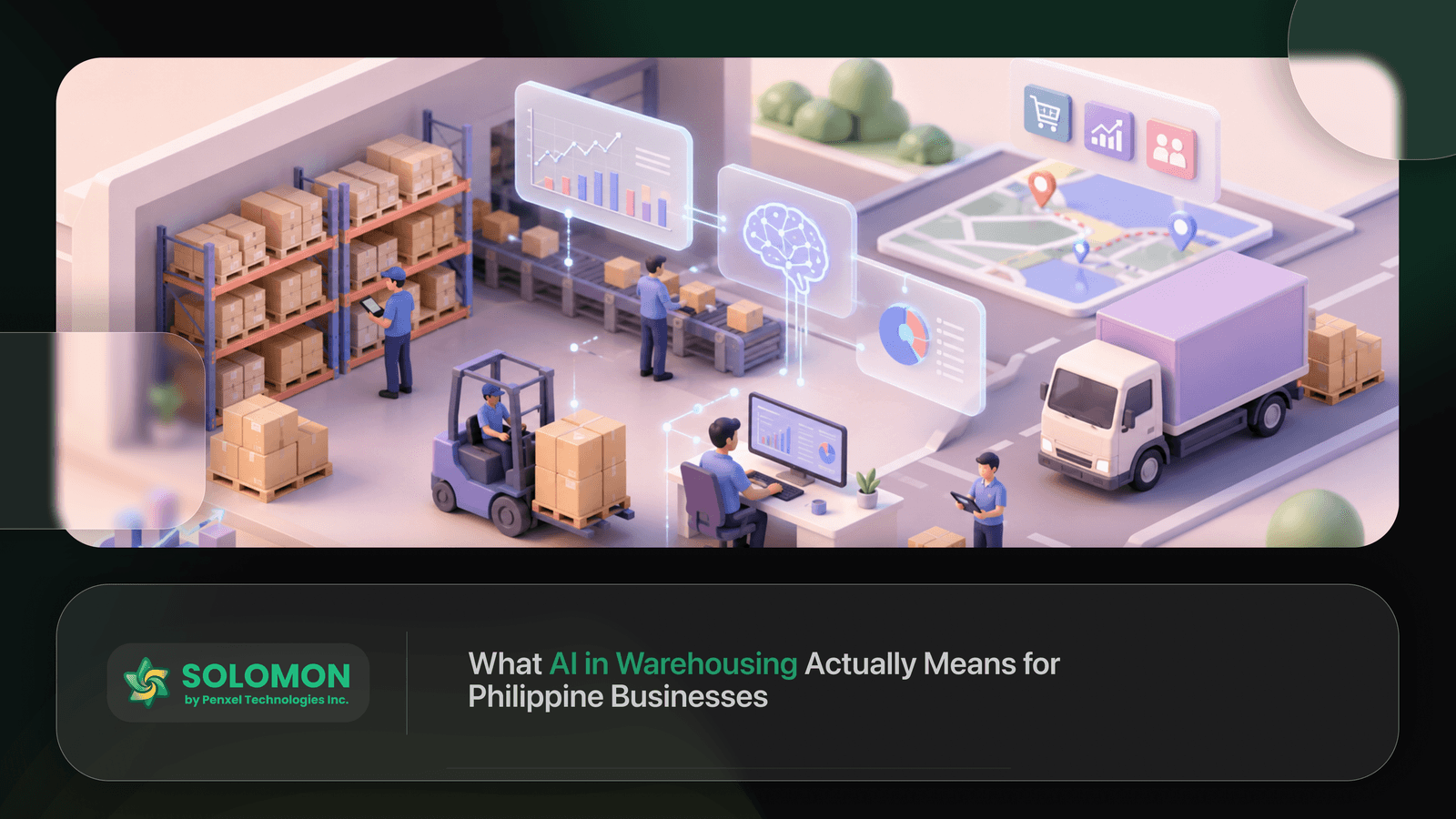
Instead, it usually begins inside existing systems like ERP, WMS, inventory management software, or logistics platforms.
The most common applications today include:
1. AI Demand Forecasting
AI forecasting tools analyze:
- Historical sales
- Seasonal demand
- Promotions
- Regional buying patterns
- Supplier lead times
to predict future inventory requirements more accurately.
According to McKinsey Operations Insights, AI-enabled forecasting can significantly reduce forecast errors and inventory inefficiencies when businesses maintain clean operational data.
For Philippine SMEs, this can help prevent:
- Overbuying slow-moving inventory
- Emergency replenishment costs
- Stockouts during peak seasons
A grocery distributor, hardware supplier, or retail chain may not need “advanced AI” — they simply need better purchasing decisions.
2. Smarter Inventory Visibility
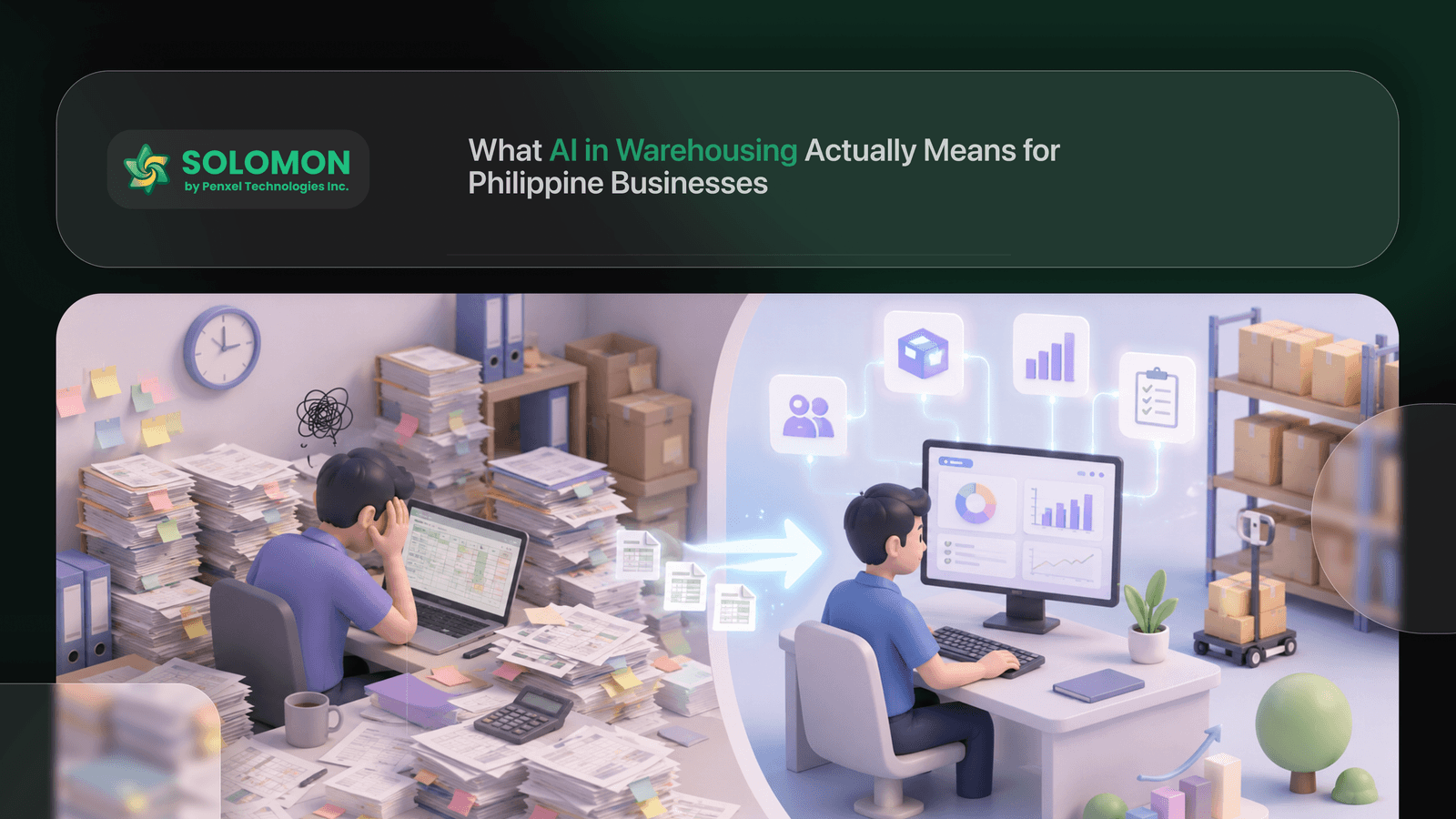
Many businesses still rely heavily on spreadsheets, manual cycle counting, and disconnected systems.
Modern AI-assisted warehouse systems can now:
- Detect unusual inventory movement
- Flag possible shrinkage
- Identify slow-moving SKUs
- Recommend reorder timing
- Predict inventory shortages early
RFID technology is also becoming increasingly important in improving real-time inventory visibility.
Coverage from Inbound Logistics and Logistics Management continues to highlight how smart warehouses globally are using RFID and automation to improve stock accuracy and replenishment speed.
For SMEs, better visibility often creates immediate operational gains before any major automation investment happens.
3. Warehouse Task Automation
This is where many people assume robots immediately replace workers.
In reality, most automation today focuses on repetitive administrative work such as:
- Barcode scanning
- Encoding delivery documents
- Automated scheduling
- Shipment tracking
- Exception alerts
- Route optimization
Industry discussions across logistics publications consistently show that the most successful AI deployments are often operational improvements rather than futuristic robotics.
Businesses are seeing ROI from:
- Document automation
- Warehouse scanning systems
- Inventory mismatch detection
- Logistics exception handling
—not from fully autonomous warehouses.
4. Better Decision-Making During Disruptions
Supply chain disruptions are no longer rare events.
Port congestion, supplier delays, fuel cost volatility, and regional logistics issues now affect operational planning regularly.
New AI-enabled logistics systems are increasingly designed to help businesses react faster by:
- Detecting delays early
- Suggesting alternative suppliers
- Adjusting reorder timing
- Prioritizing urgent inventory
As discussed in logistics industry coverage from Logistics Management, supply chains are shifting from simple visibility toward intelligence-led operations where systems assist managers in making faster operational decisions.
The Biggest Misconception About AI in Warehousing
Many SMEs assume AI requires:
- Huge budgets
- Robotics infrastructure
- Data science teams
- Enterprise-level operations
That’s no longer true.
The bigger challenge is usually operational discipline.
Industry research consistently shows that AI performs poorly when businesses still rely on:
- Inconsistent inventory records
- Manual workflows
- Disconnected systems
- Inaccurate sales data
AI does not fix poor operations — it exposes inefficiencies faster.
For many Philippine SMEs, the real starting point is:
- Improving inventory accuracy
- Standardizing warehouse processes
- Centralizing operational data
- Digitizing manual workflows
AI becomes more useful after those foundations exist.
What SMEs Should Actually Focus On
Instead of chasing “smart warehouse” hype, SMEs should prioritize technologies that directly improve operational visibility and decision-making.
The most practical starting points are usually:
- Inventory management systems with forecasting
- Barcode or RFID tracking
- Integrated purchasing and warehouse data
- Automated reorder alerts
- Logistics visibility dashboards
- AI-assisted reporting inside ERP systems
The goal is not replacing warehouse teams.
The goal is helping smaller operational teams make faster, more accurate decisions while scaling efficiently.
The Real Opportunity
The companies that benefit most from AI in warehousing over the next few years may not be the largest businesses.
They may be the SMEs that:
- Digitize operations early
- Clean up operational data
- Improve inventory visibility
- Reduce manual processes before scaling
Because in modern supply chains, operational speed and visibility increasingly matter more than company size alone.
And as Philippine retail and logistics continue evolving, businesses that can respond faster to demand changes, inventory issues, and supply disruptions will likely outperform slower competitors — even without massive automation budgets.
Sources & Further Reading
- Supply Chain Dive
- McKinsey Operations Insights
- Inbound Logistics
- Logistics Management
- Ninja Van Philippines Logistics Trends