For many businesses in the Philippines, Excel is where operations begin.
Inventory tracking.
Sales reports.
Purchase monitoring.
Warehouse counts.
Delivery schedules.
Financial summaries.
At the early stage, spreadsheets feel practical because they’re cheap, familiar, and easy to start with.
And to be fair — Excel works well when a business is still small.
But the problem is this:
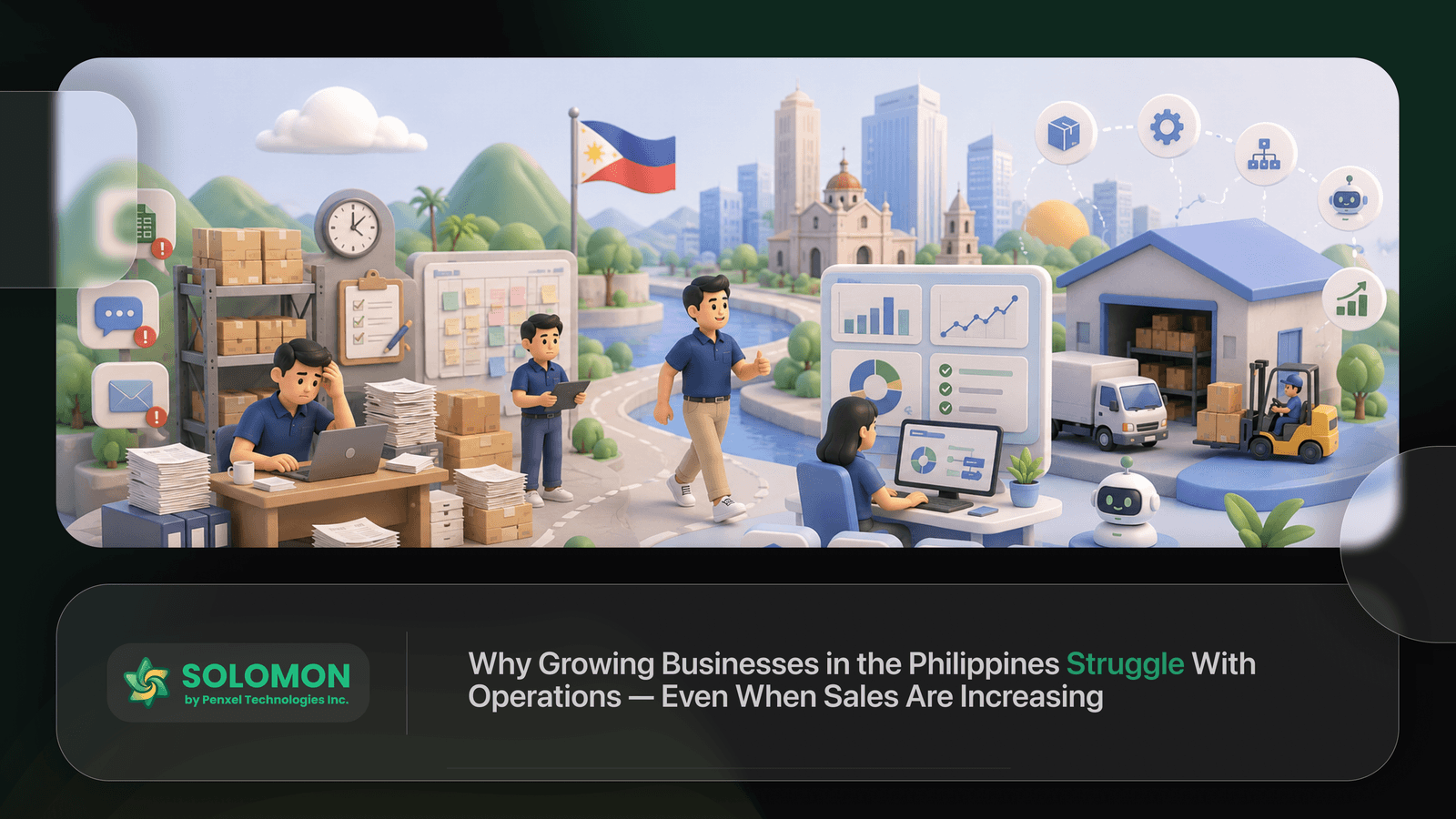
Many SMEs continue building their entire operations around spreadsheets long after the business has already outgrown them.
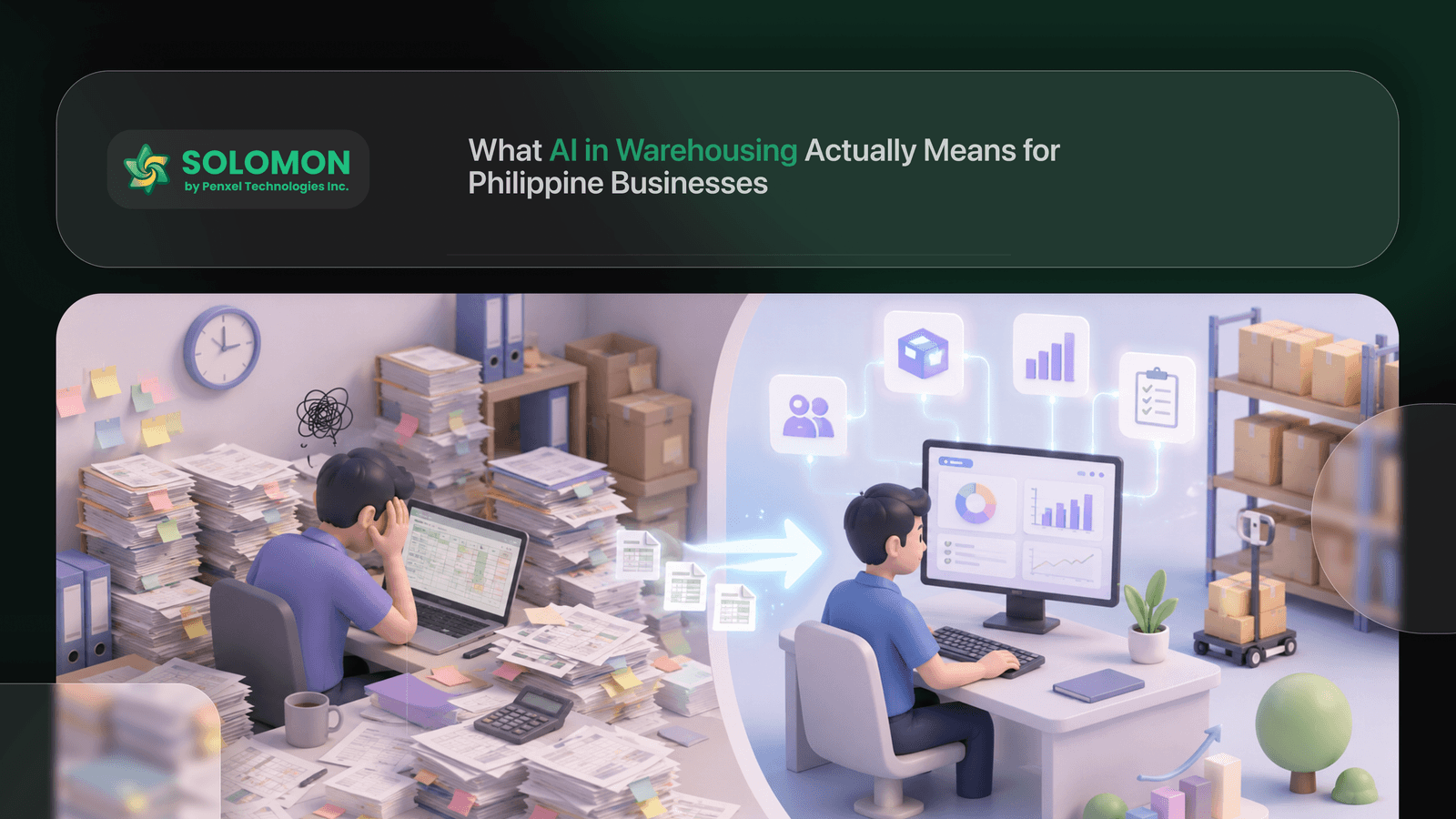
That’s when Excel quietly shifts from being a helpful tool into an operational risk.
Not overnight.
Not dramatically.
But slowly — through delays, errors, bottlenecks, and invisible inefficiencies that compound as the company grows.
The Real Problem Isn’t Excel Itself
Excel is not “bad.”
The issue is using spreadsheets as a long-term operational system for a growing business.
Because as operations become more complex, spreadsheets begin creating problems they were never designed to solve:
- Multiple people editing the same file
- Duplicate inventory records
- Delayed updates
- Version confusion
- Manual encoding mistakes
- Missing stock movement history
- Slow reporting
- Dependence on specific employees
At small scale, these issues feel manageable.
At larger scale, they become expensive.
Growth Creates Operational Complexity
Most SMEs don’t notice the problem immediately because growth often hides operational inefficiencies at first.
Sales increase.
Orders increase.
Inventory volume increases.
But eventually, complexity catches up.
Suddenly:
- Warehouse teams can’t trust inventory numbers
- Purchasing becomes reactive instead of planned
- Finance reports don’t match actual stock
- Operations managers spend hours validating data manually
- Owners lose visibility across branches or warehouses
And the bigger the business becomes, the more dangerous spreadsheet dependency gets.
The “One Employee Problem”
One of the most common operational risks in Philippine SMEs is what many businesses quietly experience:
Only one employee fully understands the spreadsheet system.
That person knows:
- which files matter
- which tabs are updated manually
- which formulas should never be touched
- which reports are “adjusted”
- which inventory numbers are unofficial
Over time, operational knowledge becomes trapped inside individuals instead of systems.
Then problems happen when:
- employees resign
- managers go on leave
- files get corrupted
- formulas break
- reporting delays happen during critical periods
The business becomes dependent not on process — but on memory.
That’s extremely risky for scaling companies.
Manual Processes Become Invisible Costs
Spreadsheet-based operations also create hidden operational costs that many SMEs underestimate.
Not because the costs are dramatic individually — but because they happen every day.
Examples include:
- Manual inventory reconciliation
- Double encoding across departments
- Rechecking delivery records
- Correcting stock discrepancies
- Delayed purchasing decisions
- Time spent validating reports
- Rebuilding broken formulas
- Chasing updated file versions
Individually, these seem minor.
Collectively, they consume hundreds of operational hours every month.
And unlike obvious expenses like rent or payroll, spreadsheet inefficiencies are difficult to measure directly — which is why many businesses tolerate them for years.
Why This Becomes Worse in the Philippines
Philippine SMEs often operate in environments where:
- inventory movement is fast
- staffing is lean
- internet reliability varies
- branch coordination is difficult
- warehouse processes are still highly manual
That makes operational visibility even more important.
As businesses expand across multiple locations, spreadsheets become harder to maintain accurately in real time.
Eventually, decision-making slows down because management no longer fully trusts the data.
And when leaders stop trusting operational numbers, growth becomes reactive instead of strategic.
The Biggest Misconception About Systems
Many SMEs delay upgrading operations because they assume systems are:
- expensive
- complicated
- only for large corporations
- difficult for employees to learn
But modern inventory and warehouse systems are increasingly designed for growing SMEs — not just enterprise companies.
The goal isn’t replacing people.
The goal is reducing operational friction.
A good operational system helps businesses:
- centralize data
- track inventory movement properly
- reduce manual encoding
- improve reporting speed
- standardize workflows
- improve accountability
- scale without operational chaos
Most importantly, systems reduce dependence on individual employees and manual processes.
Excel Is Great — Until It Becomes the System
Spreadsheets are powerful tools.
But they were never meant to become the operational backbone of a scaling business.
And many SMEs only realize this after:
- inventory discrepancies grow
- reporting becomes unreliable
- warehouse mistakes increase
- operational bottlenecks slow expansion
By then, the business is already spending more time fixing processes than improving them.
The Real Cost of Delaying Operational Systems
The cost of staying on spreadsheets is rarely visible immediately.
It shows up slowly through:
- delayed decisions
- operational stress
- inventory inaccuracies
- lost productivity
- scaling limitations
In many cases, businesses don’t outgrow Excel because they become “too big.”
They outgrow it because operational complexity eventually exceeds what manual systems can handle reliably.
And in a competitive market, businesses that cannot scale operations efficiently often struggle long before sales stop growing.
Final Thought
Excel helped many Philippine SMEs get started.
But growth requires more than survival tools.
At some point, businesses need operational systems built for visibility, coordination, and scalability — not just spreadsheets held together by manual effort.
Because operational problems rarely destroy businesses all at once.
Most of the time, they grow quietly in the background until scaling becomes harder than it should be.