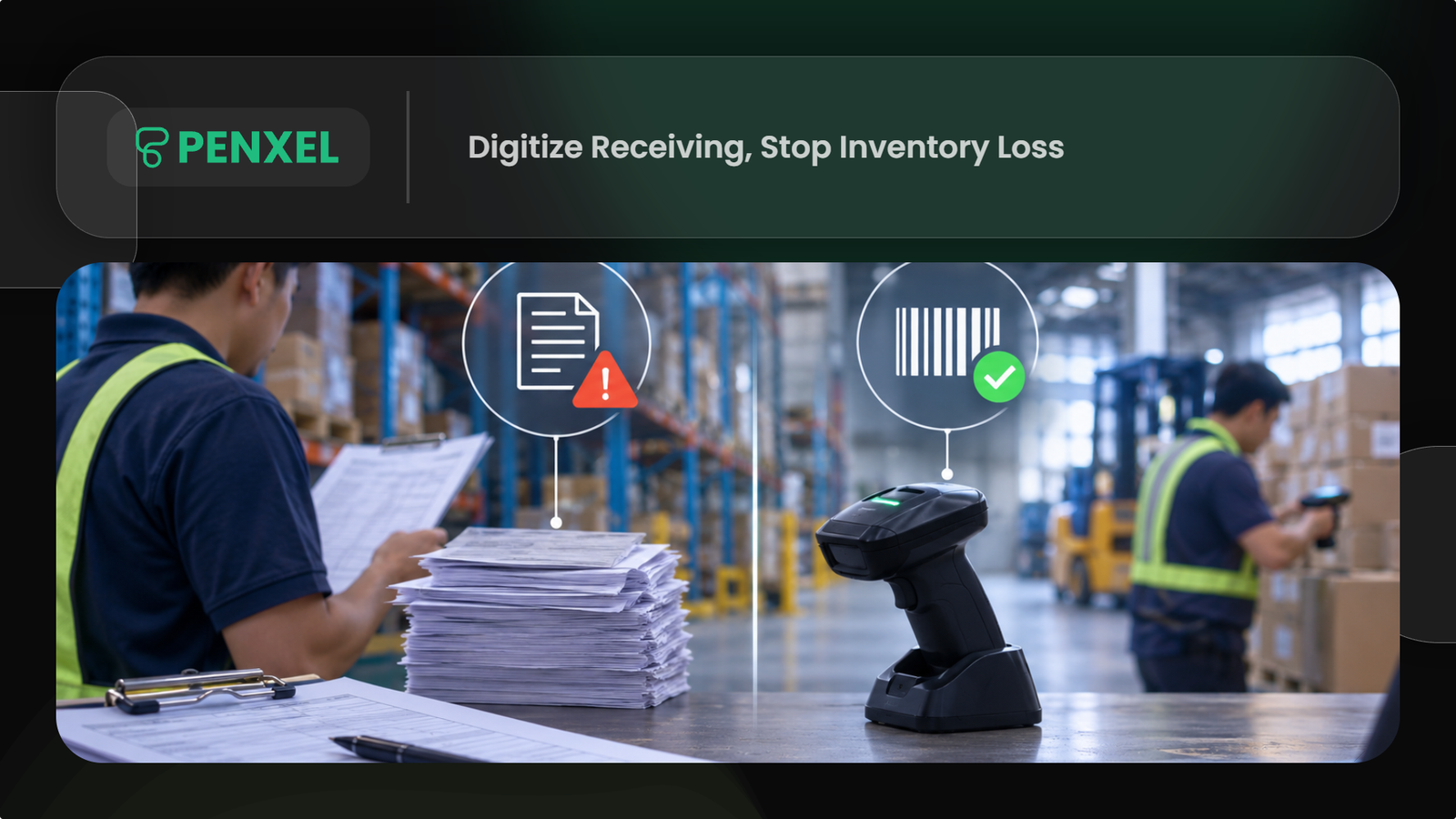
In the complex landscape of modern manufacturing and logistics, it's easy to fall back on conventional wisdom. When pick accuracy dips, the immediate instinct often points to staffing shortages, leading to increased headcount. However, recent analyses across our customer base reveal a counter-intuitive truth: simply adding more hands rarely translates to reliably better accuracy. In fact, past a certain point, a larger workforce can exacerbate problems within an already broken process, leading to more errors, faster, and often untracked.
The Headcount Fallacy: Why More Isn't Always Better#
The core issue isn't the number of people, but the clarity and precision of the process they follow. Plants with the highest pick accuracy aren't necessarily the best-staffed; they are the ones where the underlying system provides explicit, unambiguous instructions. This means telling the picker exactly where to go, what specific item to expect, and often, how to verify it. Without this systematic guidance, even the most diligent employees are left to interpret, guess, or rely on outdated information, leading to inconsistencies and errors.
Consider a scenario where a picker is tasked with fulfilling an order for multiple SKUs from a large warehouse. If their instructions simply list items and quantities without precise location guidance or real-time inventory verification, they might:
Waste time searching: Inefficient navigation through aisles, leading to slower pick rates.
Pick the wrong variant: Mistaking similar-looking products (e.g., different sizes of the same item) if the system doesn't enforce precise identification.
Encounter empty bins: Arriving at a location only to find the item is not there, causing delays and requiring manual overrides or re-assignment.
In such cases, adding more pickers merely increases the number of individuals susceptible to these same systemic flaws. It's akin to adding more cooks to a kitchen without a clear recipe or organized pantry; the result is likely more chaos, not more efficiency. The solution lies in empowering the existing workforce with intelligent systems that minimize ambiguity and maximize precision.
Precision Through System Guidance#
Effective system guidance moves beyond basic pick lists. It integrates:
Dynamic Slotting: Optimizing storage locations based on demand, size, and pick frequency.
Directed Picking Paths: Algorithms that calculate the most efficient route through the warehouse for a given order batch.
Location-Specific Instructions: Pinpointing the exact bin or shelf for an item, often coupled with visual aids or barcode scanning for confirmation.
Real-time Inventory Updates: Ensuring that the system's recorded stock levels accurately reflect physical reality, preventing "empty bin" trips.
When a system tells a picker precisely where to go and what to expect, it transforms their role from an interpreter of vague instructions to an executor of a highly optimized process. This shift not only boosts accuracy but also improves pick rates, reduces training time, and minimizes human error, ultimately leading to a more reliable and productive operation. The key insight is to trust your numbers – and ensure those numbers are accurate enough to be trusted.
The Hidden Cost of Distrust: Safety Stock and Data Reliability#
Beyond pick accuracy, the impact of distrust in one's own data manifests strikingly in safety stock levels. Engage a plant manager about their safety stock, and the rationale is rarely a precise formula derived from lead times, demand variability, and service level targets. More often, the honest answer reveals a "just in case the system's wrong" mentality. This feeling, while understandable, carries a significant financial burden.
This "just in case" buffer is, in essence, a measurement of how much a facility distrusts its own inventory management system and the data it provides. It translates directly into capital tied up in excess inventory, occupying valuable warehouse space, incurring carrying costs, and increasing the risk of obsolescence. This isn't about being overly cautious; it's about compensating for perceived data inaccuracies.
Quantifying the Cost of Distrust#
Consider the following implications of unnecessarily high safety stock:
Tied-up Capital: Every peso of excess inventory is capital that could be invested elsewhere, such as in technology upgrades, R&D, or employee training.
Increased Carrying Costs: These include warehousing (rent, utilities), insurance, taxes, shrinkage, and obsolescence. Industry estimates suggest carrying costs can range from 15% to 35% of inventory value annually.
Reduced Agility: Large inventory buffers can mask underlying demand fluctuations or supply chain disruptions, making it harder to react quickly to market changes.
Higher Risk of Obsolescence: Especially for products with short lifecycles or those subject to rapid technological change, excess stock can quickly become unsellable.
Suppliers who have successfully reduced safety stock without escalating risk haven't done so by simply being "braver." They've achieved it by meticulously building trust in their numbers. This involves implementing robust inventory accuracy measures, ensuring real-time data capture, and deploying systems that provide a single, reliable source of truth for all inventory-related information. When the data is consistently accurate and auditable, the fear of "the system being wrong" diminishes, allowing for leaner, more efficient inventory strategies.
Building Trustworthy Systems: Beyond Instinct#
The common thread linking pick accuracy and safety stock optimization is the foundational requirement for trustworthy data and intelligent systems. Moving beyond instinct-driven decisions requires a strategic shift towards process standardization, data validation, and technology adoption.
Pillars of Trustworthy Systems#
Data Integrity at the Source: Errors often originate at the point of data entry. Implementing barcode scanning, RFID, or other automated data capture technologies ensures accuracy from the moment an item enters or leaves the system.
Real-time Visibility: Systems that provide immediate updates on inventory movements, order status, and production progress eliminate information lag, allowing for proactive decision-making.
Process Standardization: Clearly defined, repeatable processes for every operation—from receiving to dispatch—reduce variability and the potential for human error.
System-Driven Enforcement: Technology should not just record data; it should actively guide and enforce correct procedures. This includes prompts for verification, error alerts, and mandatory scanning steps.
Continuous Auditing and Reconciliation: Regular cycle counting, physical inventories, and reconciliation processes help identify and correct discrepancies, reinforcing data accuracy.
The journey to building these trustworthy systems is often iterative. Early adopters, like Penxel's first customers, play a crucial role in this evolution. These pioneers understood that a robust system isn't built in a vacuum; it's forged through real-world application, identifying pain points, and collaboratively refining solutions. Their willingness to engage with an evolving platform provided invaluable insights into what actually breaks in a live operational environment. This foundational learning, often gained through intensive 45-day deployments and hands-on problem-solving, is what ultimately shapes templated solutions that are resilient, reliable, and truly earn the trust of plant managers.
Implementing Change: A Strategic Approach#
Transitioning from instinct-driven operations to data-centric decision-making requires a structured approach. It's not about replacing people with machines, but about empowering people with better tools and processes.
Key Steps for Implementation#
Audit Current Processes: Begin with a thorough review of existing picking, inventory management, and data capture processes. Identify bottlenecks, common error points, and areas where manual intervention is high.
Identify Data Gaps and Inaccuracies: Pinpoint where data reliability breaks down. Is it during receiving? During transfers? Are there discrepancies between physical counts and system records?
Define Clear Metrics: Establish key performance indicators (KPIs) for pick accuracy, inventory turns, safety stock levels, and order fulfillment rates. These will serve as benchmarks for improvement.
Invest in the Right Technology: Evaluate Warehouse Management Systems (WMS), Manufacturing Execution Systems (MES), and other automation tools that offer directed workflows, real-time tracking, and robust data validation capabilities.
Prioritize Process Re-engineering: Before implementing new technology, streamline and standardize your processes. Technology amplifies good processes; it rarely fixes broken ones.
Pilot Programs: Implement changes in a controlled environment. A phased rollout allows for testing, gathering feedback, and making necessary adjustments without disrupting the entire operation.
Training and Change Management: Equip your workforce with the skills and understanding needed to adapt to new systems and processes. Address concerns openly and highlight the benefits of the changes.
Ultimately, the goal is to cultivate a culture where decisions are driven by reliable data, not by gut feelings or reactive measures. When plant managers can confidently rely on their numbers, they can optimize headcount, reduce unnecessary safety stock, and make strategic choices that enhance efficiency, reduce costs, and improve overall operational performance. The path to sustained improvement lies not in adding more hands to a problem, but in building smarter, more trustworthy systems.