The clock ticks relentlessly in high-stakes projects, and missing a go-live date can feel like a minor setback, often mitigated by contractual clauses. However, the true cost of such delays extends far beyond financial penalties, deeply impacting professional relationships and internal credibility in ways that are rarely discussed but profoundly felt. When a project champion within a client organization spends weeks fielding uncomfortable questions from their board, the damage to trust can be irreparable, fostering a cautious, risk-averse dynamic that hinders future collaboration.
The Invisible Erosion of Trust: Beyond the Penalty Clause#
Consider a scenario where a critical system deployment misses its target by six weeks. The client might be understanding, but their internal stakeholders, particularly the board, are often less forgiving. The plant manager, who advocated for the new system and championed your team, suddenly finds themselves in an unenviable position, defending a timeline that has slipped. This isn't just about project management; it's about the erosion of an individual's professional standing and the organizational trust placed in them.
While a penalty clause might compensate for direct financial losses, it cannot restore lost credibility. The plant manager, once an enthusiastic proponent, becomes understandably cautious. Every subsequent request, every new proposal, is met with an added layer of scrutiny, a subtle but significant shift in the relationship's foundation. This cautiousness translates to slower decision-making, increased oversight, and a general reluctance to take further risks, ultimately impacting the agility and potential for future innovation within the partnership. The long-term cost is a diminished capacity for proactive engagement and a lingering shadow over even successful project completions.
The Non-Negotiables of Just-In-Time (JIT) Supply Chains#
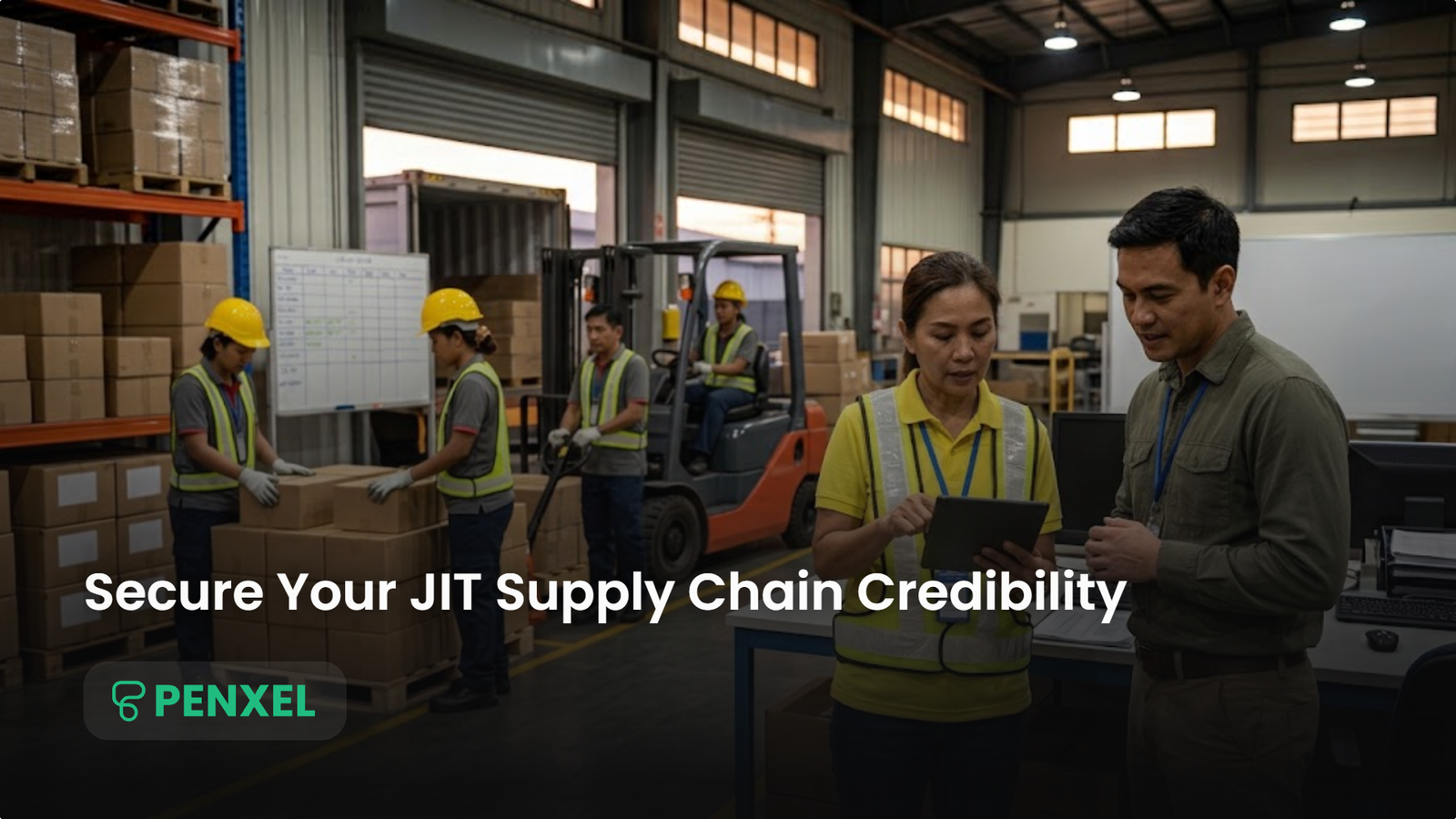
In the realm of Original Equipment Manufacturer (OEM) supply, the stakes are perpetually high. JIT methodologies demand precision and predictability, making certain capabilities non-negotiable. OEMs rely on their suppliers to operate with an almost telepathic understanding of their needs, ensuring seamless production flow. From years of working with JIT suppliers, three core requirements consistently emerge as paramount:
1. Advanced Shipping Notice (ASN) Accuracy#
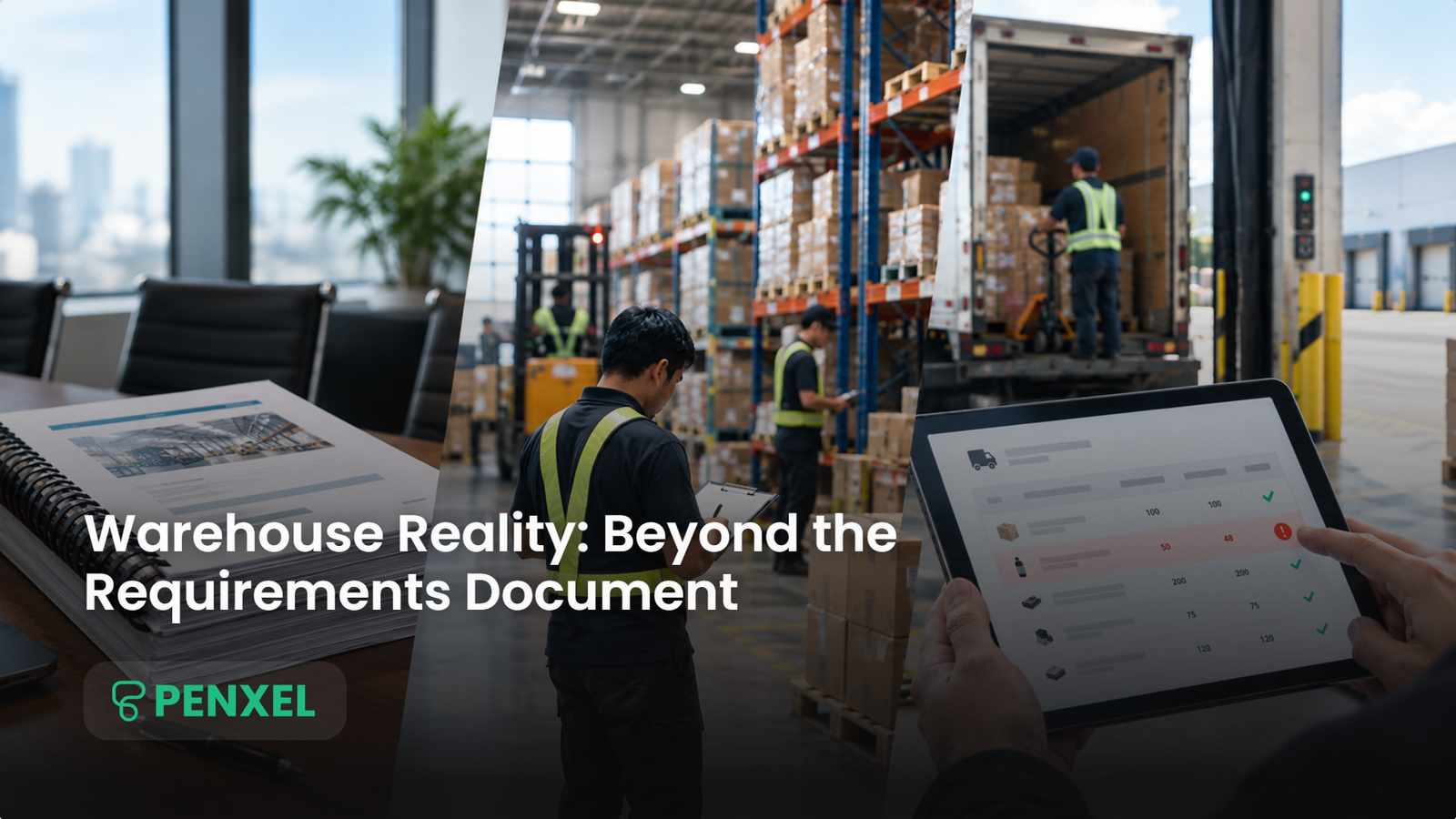
An ASN is more than just a packing list; it's a critical data transfer that informs the OEM's receiving operations, production scheduling, and inventory management systems. Inaccurate ASNs lead to a cascade of problems:
Receiving Delays: Misaligned data means manual reconciliation, slowing down dock-to-stock processes.
Production Disruptions: If the system expects one quantity or part number but receives another, production lines can stall awaiting correct inputs.
Inventory Discrepancies: Incorrect ASNs propagate errors into the OEM's inventory records, leading to phantom stock or unexpected shortages.
For an OEM, an inaccurate ASN isn't merely an administrative error; it's a direct threat to their finely tuned production schedule, potentially resulting in costly line stoppages and missed delivery commitments to their own customers.
2. Lot Traceability#
In industries from automotive to electronics, the ability to trace every component back to its origin and forward to its final destination is critical for quality control, regulatory compliance, and recall management. Lot traceability encompasses:
Component Origin: Knowing exactly where raw materials and sub-components came from.
Production History: Tracking which specific lot was used in which production run, by whom, and on what equipment.
Distribution Path: Following the journey of finished goods through the supply chain.
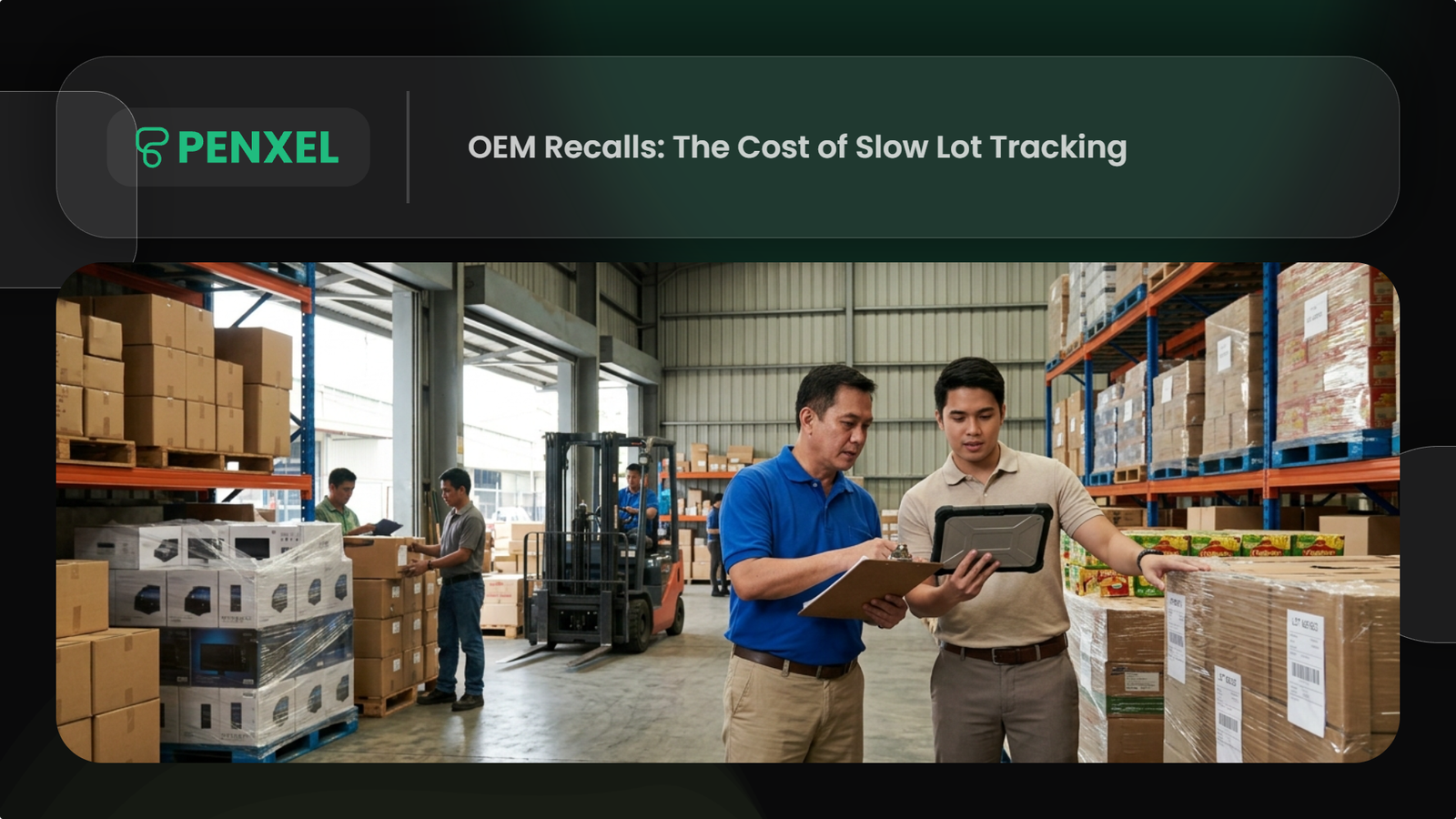
When a quality issue arises, full lot traceability allows for rapid identification of affected products, minimizing the scope of recalls and protecting brand reputation. Without it, a small defect can necessitate a massive, expensive, and reputation-damaging recall of all units produced within a broad timeframe. OEM audits rigorously assess this capability, making it a key metric on supplier scorecards.
3. Kanban Replenishment Visibility#
Kanban systems are the backbone of many JIT operations, signaling demand and triggering replenishment based on actual consumption. Effective Kanban replenishment visibility means:
Real-time Demand Signals: Suppliers must see when an OEM pulls a part, immediately understanding the need for replenishment.
Inventory Levels at OEM Site: Understanding the stock levels at the OEM's receiving dock or production line to proactively manage supply.
Replenishment Status: Knowing the status of replenishment orders, from order placement to in-transit status and estimated arrival.
This visibility ensures that parts are delivered precisely when needed, preventing both stockouts and excessive inventory. A lack of visibility can lead to either an oversupply (tying up capital and space) or, more critically, an undersupply that halts an OEM's production line, incurring substantial costs and penalties.
The Fork in the Road: Rebuild or Configure?#
Given these consistent, critical demands, it's striking how often suppliers attempt to build custom solutions for these exact problems from the ground up. The logic for ASN accuracy, lot traceability, and Kanban visibility is not unique to a single supplier; it's a standardized set of requirements dictated by OEM operational best practices and audit frameworks.
The choice suppliers face is stark:
Pay to rebuild: Invest significant resources (time, money, talent) in developing custom logic that hundreds of other suppliers in their corridor have already implemented, often repeating common pitfalls and extending deployment timelines.
Start from a template: Leverage a pre-built, industry-specific template that already incorporates the nuances of OEM requirements and audit expectations, focusing resources on configuration rather than foundational development.
Rebuilding from scratch introduces unnecessary risk, extends project timelines, and often results in a system that, while functional, may lack the tested robustness and comprehensive features of a purpose-built template. It’s an inefficient allocation of resources when the core problems are well-understood and common across the industry.
The Silent Threat: Inventory Variance and Its Escalation#
Your OEM doesn't directly see your internal inventory variance. What they observe, and what ultimately impacts their operations, is your delivery performance. This distinction is crucial because it allows inventory variances to fester, silently.
A discrepancy between your physical inventory and your system records can persist for months, masked by safety stock, covered by hurried scrambles to find missing parts, or compensated by expediting orders. These stop-gap measures create a false sense of security, delaying the inevitable. The variance is always there; it just isn't expensive yet.
The moment of reckoning arrives when the buffer isn't enough. Perhaps an unexpected surge in demand, a supplier delay, or a simple miscalculation exhausts the safety stock. Suddenly, what was a quiet data anomaly escalates into a critical incident: a missed shipment, a production line stoppage at the OEM, or a breach of contract.
At this point, it's no longer a data problem that can be quietly resolved by an inventory clerk. It becomes an incident report, a root-cause analysis meeting with senior management, and a detrimental hit on your OEM supplier scorecard. This scorecard impact isn't transient; it follows you into the next quarter's program awards, potentially jeopardizing future business and partnership opportunities. The cost of that initial, seemingly innocuous variance has now multiplied exponentially.
Penxel's Approach: Configuration for Precision and Speed#
Recognizing these challenges, Penxel champions a different approach for JIT suppliers: a template-driven solution designed for rapid deployment and OEM compliance. We understand that while your operations are unique, the core logic required to meet OEM demands is largely standardized.
Our solution is built on the principle of configuration over custom development for common JIT functions. We pre-build the critical components that every OEM supplier needs:
OEM Supplier Scorecard Logic: Ready-made structures to track and report on key performance indicators (KPIs) that matter most to OEMs, ensuring you're always audit-ready.
Robust Lot Traceability Structure: A comprehensive framework for tracking materials and products throughout their lifecycle, from inbound raw materials to outbound finished goods.
Accurate ASN Matching Logic: Systems designed to ensure your Advanced Shipping Notices precisely match your physical shipments and OEM expectations, minimizing receiving discrepancies.
What we configure is you: your specific item master, your unique plant requirements, your specific business rules, and your integration points. This targeted configuration ensures the system is precisely tailored to your operational reality without the prohibitive cost and extended timelines of building foundational logic from scratch.
This approach offers several distinct advantages:
Accelerated Deployment: Go live in a fraction of the time compared to custom builds, minimizing the risk of those costly, trust-eroding delays.
Built-in Compliance: Our templates are designed with OEM audit standards in mind, ensuring you meet regulatory and quality requirements from day one.
Reduced Risk: Leveraging proven, pre-built logic minimizes development errors and system bugs, leading to a more stable and reliable operation.
Cost Efficiency: Focus your investment on tailoring the solution to your specific needs, not reinventing common functionalities.
The path to optimized OEM supply chain performance doesn't have to be long and arduous. It begins with a small, strategic step. Penxel offers a 5-day inventory count service, executed by two trained counters, for a fixed fee of ₱10,000. This fee is fully credited towards our ₱49,000 Starter Pack, which can have you live with essential JIT capabilities in just 10 deployment days. This initial step provides crucial data visibility and sets the foundation for a more precise, reliable, and credible supply chain operation.
Don't let hidden costs erode your hard-earned credibility or allow silent variances to escalate into costly crises. Message us today to explore how our template-driven solutions can empower your OEM supply chain.