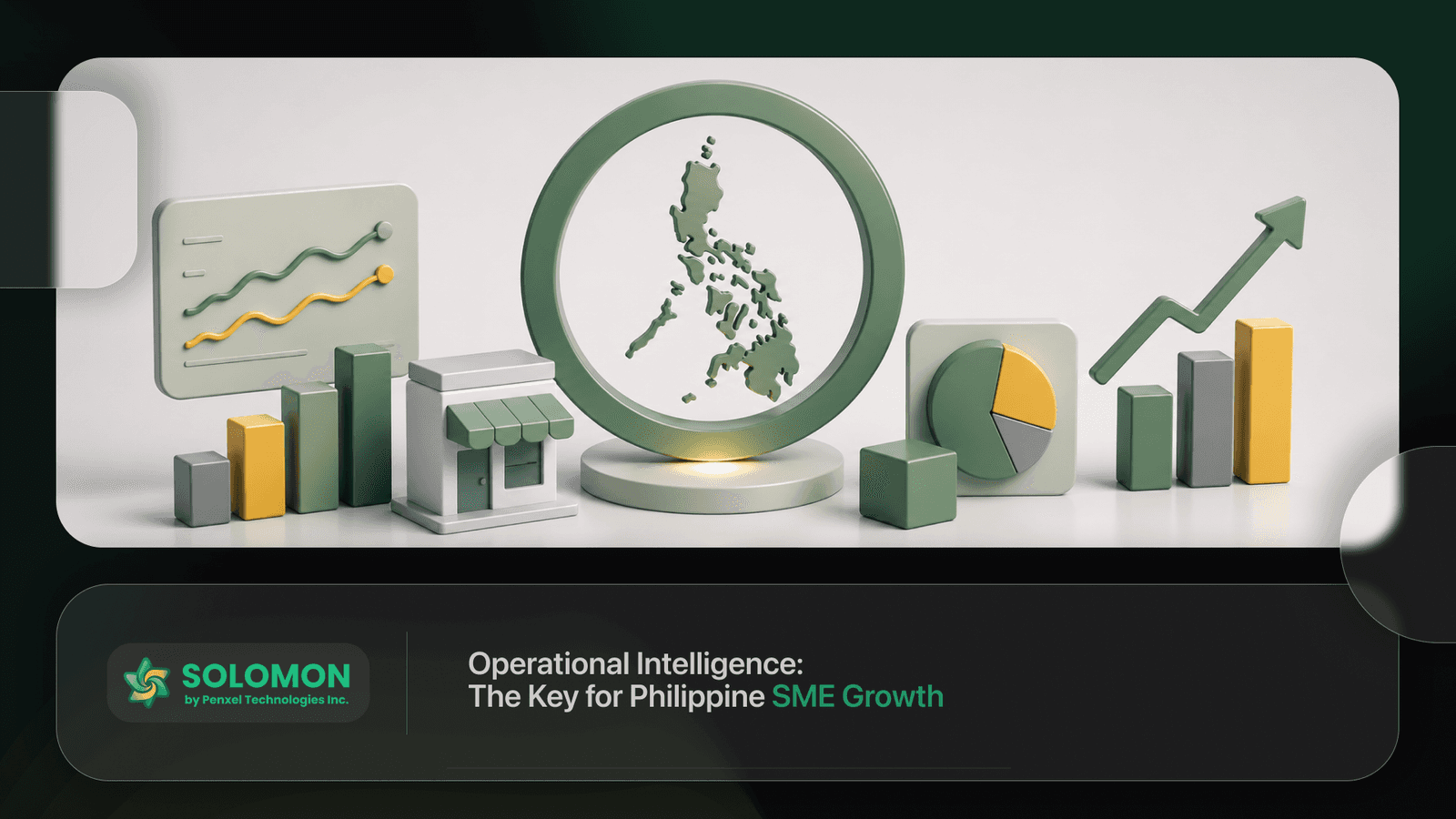
The digital age promised efficiency and growth for Philippine SMEs, often through the allure of new software solutions. Businesses readily invest in accounting systems, CRM platforms, inventory management tools, and more, hoping to streamline operations and boost productivity. Yet, many find themselves facing a paradox: an abundance of data and sophisticated tools, but a persistent struggle to translate these into tangible improvements, smarter decisions, or a clear competitive edge. The issue isn't always the lack of software; it's the lack of intelligence derived from it.
The Software Paradox: More Tools, Less Clarity?#
For many Philippine SMEs, the journey into digital transformation often begins with acquiring new software. The market is flooded with solutions promising to solve every operational challenge, from managing customer relationships to optimizing supply chains. While these tools are undoubtedly powerful, their mere presence in an organization doesn't automatically guarantee success.
The Lure of the "Next Big Solution"#
SMEs are frequently encouraged to adopt the latest enterprise resource planning (ERP) system, customer relationship management (CRM) platform, or specialized industry software. The marketing often highlights seamless integration, robust features, and significant efficiency gains. Business owners, eager to keep pace with larger competitors and improve their bottom line, invest considerable capital and time into these implementations.
The Unseen Challenges of Software Adoption#
However, the reality often diverges from the promise. Several common pitfalls emerge post-implementation:
Underutilization of Features: Many complex software packages come with a vast array of functionalities, only a fraction of which are actually used by SMEs. The investment in unused features becomes a sunk cost.
Data Silos Persistence: Despite claims of integration, different systems often fail to communicate effectively, leading to fragmented data. Information remains trapped in separate applications, preventing a holistic view of operations.
Lack of Actionable Insights: Software systems excel at collecting and storing data. What they often don't do, without further intervention, is automatically transform raw data into clear, actionable insights that guide strategic decisions.
Increased Complexity: Sometimes, adding more software, especially without a clear strategy for data flow and process integration, can inadvertently increase operational complexity rather than simplify it. Teams may spend more time navigating multiple interfaces than focusing on core tasks.
Cost Beyond Licensing: Beyond the initial purchase or subscription fees, SMEs face costs related to customization, training, ongoing maintenance, and the opportunity cost of resources diverted to implementation.
The fundamental challenge isn't the software itself, but the ability to harness its data to truly understand and improve operations. This is where Operational Intelligence (OI) enters the picture, offering a way out of the software paradox.
What is Operational Intelligence?#
Operational Intelligence (OI) is more than just data collection; it's the ability to gain real-time, actionable insights from business operations data to make informed decisions and optimize processes. It's about understanding what is happening right now, why it's happening, and what needs to be done about it.
Unlike traditional Business Intelligence (BI), which often focuses on historical data analysis to understand past performance, OI emphasizes real-time monitoring and analysis to guide immediate actions and continuous improvement.
Key Components of Operational Intelligence:#
Comprehensive Data Collection: Gathering data from all relevant sources, including existing software (CRM, ERP, accounting), production sensors, IoT devices, website analytics, social media, and even manual inputs.
Real-time Processing and Analysis: Utilizing advanced analytics to process data as it flows in, identifying patterns, anomalies, and trends instantaneously.
Dynamic Monitoring and Visualization: Presenting key performance indicators (KPIs) and operational metrics through intuitive dashboards, alerts, and reports that provide a clear, current picture of operations.
Actionable Insights and Recommendations: Translating complex data into clear recommendations for immediate intervention or process adjustments. This moves beyond merely showing data to suggesting what to do next.
Continuous Feedback Loop: Establishing a system where insights lead to actions, and the results of those actions are then monitored, feeding back into the intelligence system for ongoing optimization.
In essence, OI transforms raw data into a living, breathing guide for operational excellence, enabling SMEs to react proactively rather than retrospectively.
Why Operational Intelligence is Crucial for Philippine SMEs#
The Philippine business landscape is dynamic, competitive, and often presents unique challenges. For SMEs, leveraging Operational Intelligence isn't just an advantage; it's increasingly a necessity for sustainable growth and resilience.
Navigating a Dynamic Market#
The Philippine market is characterized by rapid shifts in consumer behavior, evolving regulatory environments, and occasional external disruptions (e.g., supply chain issues, natural calamities). OI provides the agility to:
Adapt to Demand Fluctuations: Real-time sales data and inventory levels can help a local restaurant adjust its daily menu or a small retailer optimize stock to meet sudden spikes or dips in customer preference.
Respond to Supply Chain Challenges: Monitoring logistics and supplier performance allows an SME to quickly identify and mitigate potential delays or disruptions in their supply chain, crucial for island-nation logistics.
Stay Ahead of Competition: Understanding operational bottlenecks and customer feedback faster than competitors can lead to quicker product iterations or service improvements.
Optimizing Scarce Resources#
Philippine SMEs often operate with tighter budgets, smaller teams, and limited access to capital compared to larger corporations. OI empowers them to make the most of what they have:
Efficient Resource Allocation: Pinpointing exactly where resources (manpower, raw materials, equipment) are being underutilized or wasted, allowing for smarter reallocation.
Cost Reduction: Identifying inefficiencies in processes, such as excessive energy consumption in a manufacturing plant or unnecessary overtime in a service business, leading to direct cost savings.
Maximizing Manpower Productivity: Understanding individual or team performance metrics to identify training needs, optimize shift schedules, or reassign tasks for maximum output.
Scenario: A small garment factory in Rizal monitors machine uptime, material waste rates, and individual worker output in real-time. OI insights reveal that a specific machine frequently breaks down, causing production delays, and that certain fabric cuts lead to excessive waste. With this intelligence, the factory can prioritize maintenance for the problematic machine, negotiate better material quality, and retrain staff on more efficient cutting techniques, directly impacting profitability.
Enhancing Customer Experience#
In a market where customer loyalty is hard-earned, understanding and responding to customer needs in real-time is paramount.
Personalized Service: Analyzing customer interaction data, purchase history, and feedback to tailor offers and services.
Faster Issue Resolution: Identifying customer pain points or service delivery issues as they happen, enabling proactive intervention before a minor problem escalates into a major complaint.
Optimized Service Delivery: For a delivery service, real-time traffic data combined with order volumes can optimize routing, leading to faster and more reliable deliveries.
Boosting Efficiency and Reducing Waste#
OI provides the granular visibility needed to uncover hidden inefficiencies across all operational touchpoints.
Bottleneck Identification: Visualizing process flows can quickly highlight areas where work gets stuck, allowing for targeted intervention.
Process Automation Opportunities: Identifying repetitive, manual tasks that consume significant time and resources, indicating potential areas for automation.
Quality Control: For food manufacturers, real-time monitoring of production parameters can ensure consistent product quality and reduce batch rejections.
Informed Decision-Making#
Moving away from gut feelings and anecdotal evidence, OI empowers SMEs to make data-driven decisions that are more likely to yield positive results. Whether it's deciding on a new product line, expanding into a new market, or adjusting pricing strategies, OI provides the evidence base.
Scaling Sustainably#
For SMEs with growth ambitions, OI builds a robust foundation. It ensures that growth is not just about adding more resources but about optimizing existing ones and scaling processes that are already efficient and well-understood. This prevents the common trap of scaling inefficiencies.
Operational Intelligence in Action: Practical Examples for Philippine SMEs#
Let's illustrate how OI can transform different types of Philippine SMEs.
Retail and E-commerce: Optimizing Inventory and Deliveries#
Scenario: A small online boutique based in Metro Manila struggles with inconsistent stock levels (overstocking slow-moving items, running out of popular ones) and frequent customer complaints about delayed or incorrect deliveries from third-party couriers. They use an e-commerce platform and a basic inventory system.
OI Solution: The boutique integrates data from their e-commerce platform (sales trends, product views, abandoned carts), inventory system (current stock, supplier lead times), and delivery partner portals (real-time package tracking, delivery success rates, common issues). They implement a custom dashboard that visualizes:
Real-time Sales Velocity: Which products are selling fastest today/this week.
Inventory Health: Alerts for low stock on high-demand items and high stock on slow-moving items.
Delivery Performance Metrics: Average delivery time per courier, percentage of successful deliveries, common reasons for delays.
Customer Feedback Trends: Analysis of comments related to product availability or delivery experience.
Outcome:
The owner can make data-driven decisions on reordering, running promotions for overstocked items, and identifying best-selling products to invest more in.
They can identify which delivery partners consistently perform well for specific routes or package types, allowing them to allocate shipments more strategically and negotiate better terms based on performance data.
Proactive communication with customers about potential delays becomes possible, improving customer satisfaction.
Food Production: Enhancing Quality and Reducing Waste#
Scenario: A local bakery in Pampanga, famous for its ensaymada, faces challenges with inconsistent batch quality, fluctuating ingredient costs, and significant waste during production. They use a basic accounting software and manual logs for production.
OI Solution: The bakery implements sensors for oven temperatures and humidity, integrates point-of-sale (POS) data for sales trends, and digitizes ingredient usage logs. A system is built to analyze:
Production Variance: Real-time comparison of actual ingredient usage against standard recipes for each batch.
Environmental Controls: Monitoring and alerting for deviations in oven temperature or proofing conditions.
Waste Tracking: Categorizing and quantifying waste (e.g., burnt batches, over-proofed dough, expired ingredients).
Sales vs. Production: Comparing daily sales figures with production volumes to minimize overproduction.
Ingredient Cost Fluctuations: Tracking supplier prices against historical data to inform purchasing decisions.
Outcome:
The head baker receives alerts for out-of-spec oven temperatures, allowing immediate adjustments and ensuring consistent product quality.
Ingredient waste is significantly reduced by identifying common causes and optimizing batch sizes based on predicted demand.
Purchasing decisions are optimized by leveraging real-time cost data, protecting profit margins.
The bakery can confidently scale production knowing that quality and efficiency are consistently monitored.
Service Industry: Optimizing Patient Flow and Staff Scheduling#
Scenario: A growing dental clinic in Cebu City experiences issues with patient wait times, appointment no-shows, and uneven staff workload, leading to frustrated patients and potential burnout for dental assistants. They use a digital appointment system but little else for operational insights.
OI Solution: The clinic integrates its appointment scheduling software, patient check-in/check-out times, dentist/assistant availability, and patient feedback forms. They visualize:Real-time Patient Flow: Current wait times, time spent in different stages of a visit.No-Show Rates: Identifying patterns (e.g., specific days, appointment types, patient demographics).Staff Utilization: How busy each dentist and assistant is throughout the day, identifying peak and off-peak periods.Service Uptake: Which treatments are most