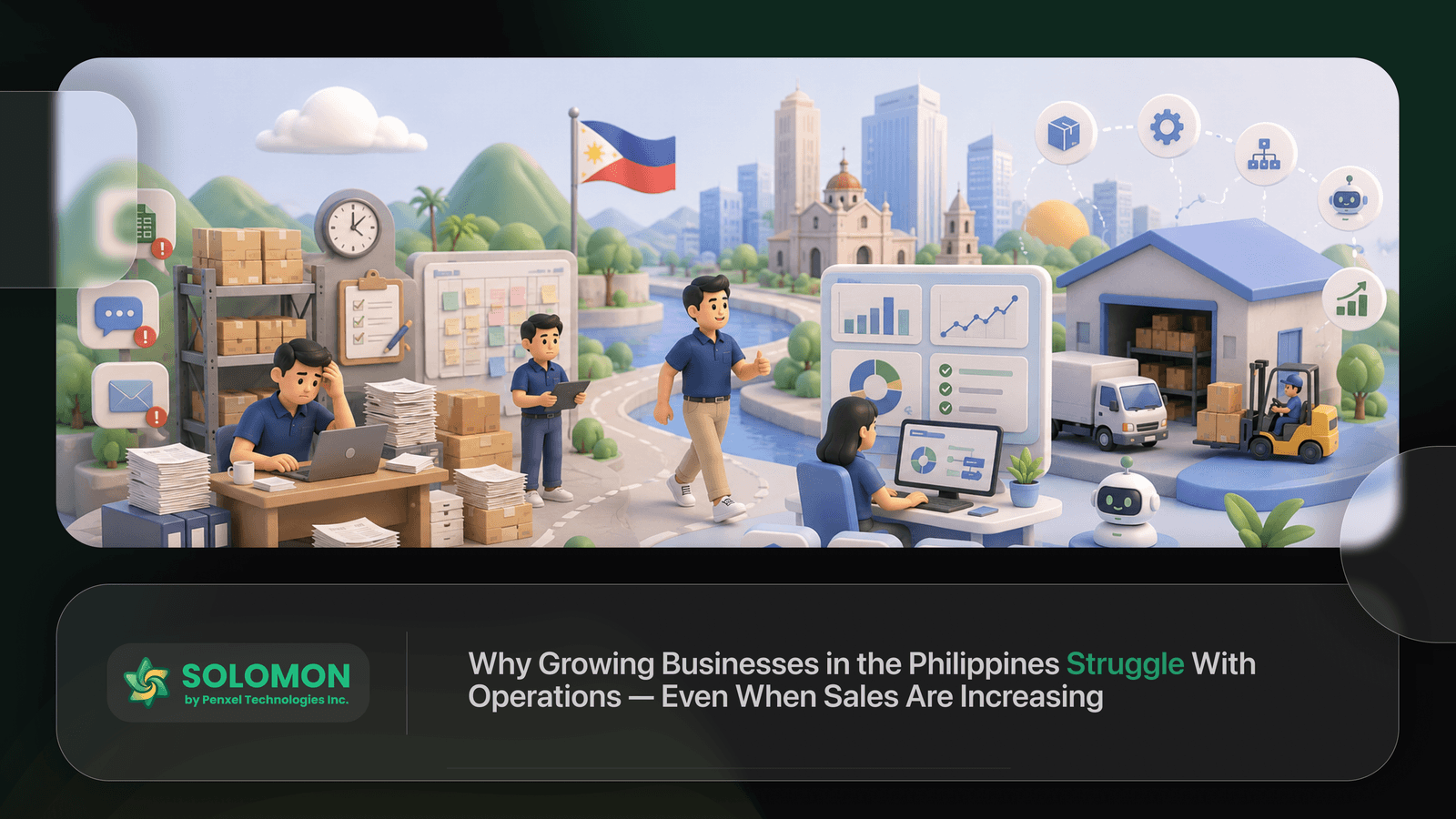
For many businesses in the Philippines, growth looks exciting at first.
More customers.
More orders.
More inventory moving.
More opportunities opening up.
But as operations expand, many companies begin facing a different challenge behind the scenes:
Operations become harder to manage.
Inventory records stop matching actual stock levels.
Approvals become delayed.
Warehouse coordination slows down.
Teams rely heavily on spreadsheets, chat messages, and manual updates.
Business owners lose clear visibility over daily operations.
At first, these problems seem manageable.
But over time, operational inefficiencies quietly become one of the biggest barriers to growth.
The Real Issue Is Operational Visibility
Many businesses assume growth challenges are caused by limited sales or insufficient manpower.
In reality, the problem is often operational visibility.
As businesses scale, manual processes that once worked during the early stages begin to break down.
This is especially common among growing SMEs in the Philippines, where operations are still frequently managed through:
- spreadsheet-based inventory tracking
- manual warehouse processes
- disconnected systems
- paper-based approvals
- chat-based coordination between teams
These methods may work temporarily, but they become increasingly difficult to maintain as operational complexity grows.
Why Not Every Business Needs a Full ERP System
When operational issues start appearing, many companies immediately consider investing in an ERP system.
However, full-scale ERP platforms are not always the right fit for every business.
For many Philippine SMEs, traditional ERP solutions can become:
- expensive to implement
- difficult to maintain
- overly complex for actual operational needs
- time-consuming to onboard across teams
What businesses often need first is not a massive enterprise platform, but better operational systems that solve specific business bottlenecks.
This includes:
- real-time inventory visibility
- warehouse management
- workflow automation
- centralized operational data
- faster reporting and decision-making
The objective is not to make operations more complicated.
The objective is to reduce friction and improve efficiency.
Modern Businesses Need Smarter Operational Systems
Today’s businesses operate in a faster and more competitive environment.
Manual processes create delays, increase human error, and limit scalability.
Modern operational systems help businesses:
- reduce repetitive manual work
- improve inventory accuracy
- streamline warehouse operations
- gain real-time business insights
- make faster operational decisions
- improve coordination across departments
The businesses that adapt early gain a significant operational advantage.
Technology Should Support the Way Businesses Actually Operate
One of the biggest challenges with traditional enterprise software is rigidity.
Many systems force businesses to adjust their operations around the software itself.
But growing companies need systems that adapt to their workflows — not the other way around.
This is where operational technology solutions become more practical for many SMEs.
Instead of overwhelming businesses with unnecessary features, focused operational systems help companies improve the areas that directly affect efficiency and profitability.
Where Penxel Fits In
Penxel focuses on operational technology solutions designed for growing businesses in the Philippines.
Rather than offering traditional ERP software, Penxel helps businesses improve operational efficiency through solutions such as:
- warehouse and inventory management
- workflow automation
- custom operational systems
- AI-powered operational insights
- business process optimization
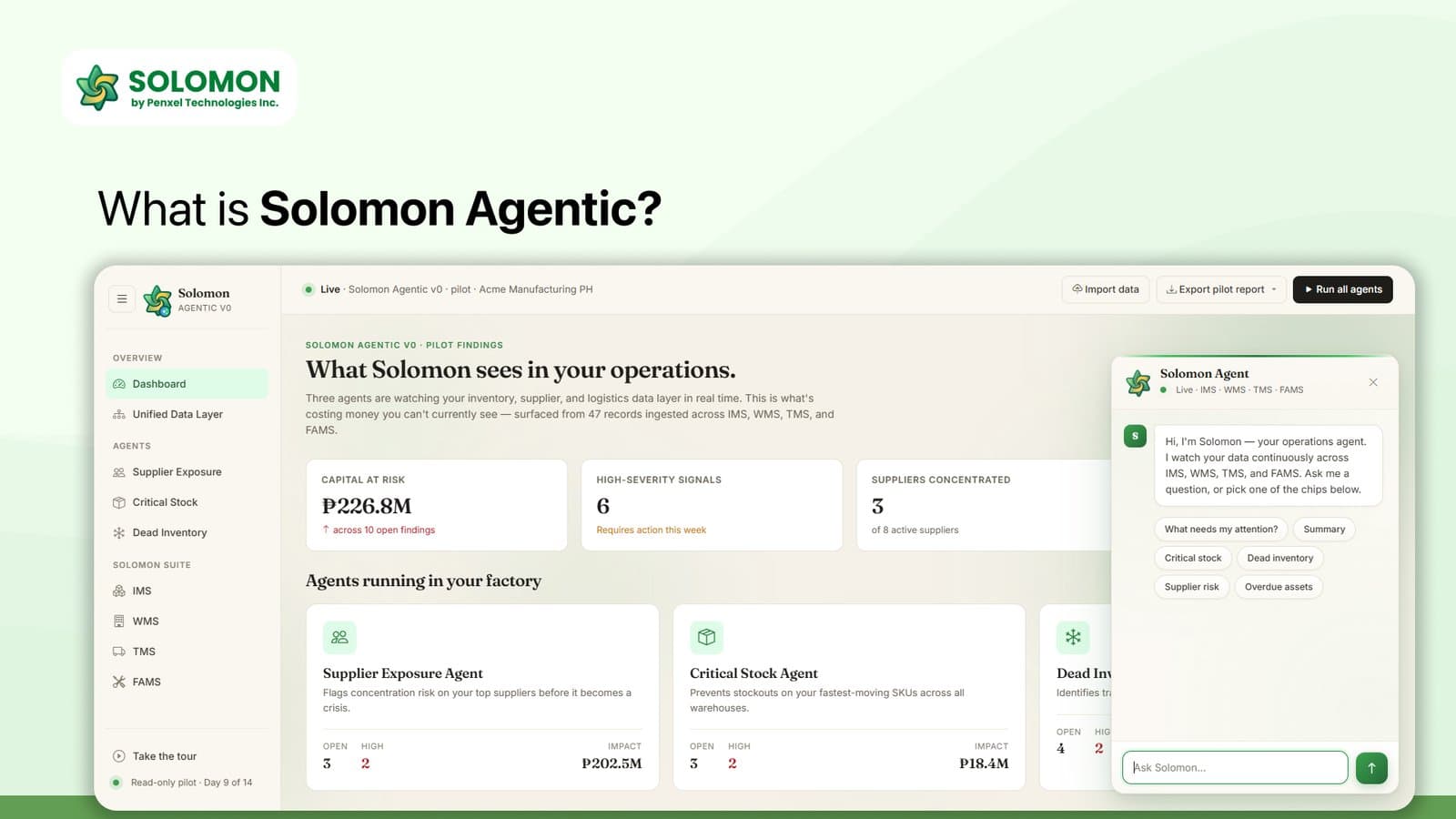
Its platform, Solomon, is built to improve inventory visibility, warehouse coordination, and operational decision-making for businesses handling increasing operational complexity.
The goal is simple:
help businesses modernize operations without unnecessary complexity.
The Future of Business Growth Is Operational Efficiency
In the coming years, the businesses that scale successfully will not simply be the ones generating the most sales.
They will be the ones operating with:
- better visibility
- faster execution
- cleaner workflows
- smarter automation
- more accurate operational data
Growth becomes sustainable when operations can scale efficiently alongside the business.
Because in today’s business environment, operational efficiency is no longer optional — it is a competitive advantage.